
Calisthenics Victoria

Supporting Volunteers

Vicsport: Sport Volunteers - Thrive with Support
Sport and volunteering are interlinked. In the sport sector, we know that volunteers ensure the activities of every sport of any size and at all levels go ahead, are well run, are accessible and inclusive. Volunteers come out in huge numbers in all weathers and at all hours to ensure sport activities go ahead. It is our volunteers who allow sport to form a critical part of the fabric of our communities.
Vicsport has partnered with Volunteering Victoria and Regional Sport Victoria to create sporting club focused resources. These resources aim to support and assist sporting clubs in their strategies and practices around volunteers.
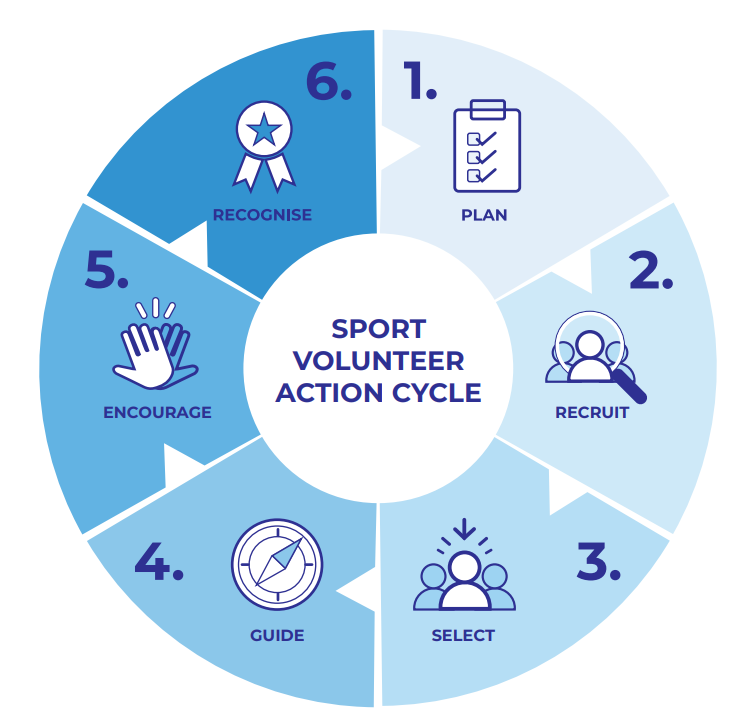
Plan
- Do a SWEEP analysis on your current reality
- Understand what your needs are and where the gaps are
- Understand the barriers to volunteering
- Plan how you are going to recruit, guide, encourage and recognise volunteers
- Consider appointing a central point person to coordinate volunteers
Recruit
- Start with the WHY
- Be clear with people about what they are signing up for (particularly when it comes to the time commitment
- Look to local community connections such as Rotary Clubs, Lions Clubs, Probus etc.
- Be flexible – remodel roles to suit people
- Ask the question at registration, consider an opt out levy
- Useful link:
- volunteersignup.org
- govolunteer.com.au
- sportspeople.com.au
- becolletive.com
- communiteer.org
- vollie.com.au
Select
- Ensure you do your due diligence with background checks – WWCC at a minimum, reference checks, qualification checks or police checks where necessary
- Willingness to sign a Code of Conduct and uphold club values
- Encourage job sharing, shuffle people around to fill gaps or create roles if need be
Guide
- Plan an orientation for new volunteers (include emergency procedures, expense approval procedures, code of conduct expectations, grievance procedure, location of relevant policies
- Consider if informal or formal training is required
- Include role specific checklists and procedures
- Provide consistent information for volunteers by identifying a point person
Encourage
- Don’t let new people sink or swim – check in, support, supervise
- Share the WHY to bring people on the journey
- Keep volunteers up to date
- Be open to fresh ideas
- If people are leaving due to burn out, it is important to understand the contributing factors
Recognise
- Key need – ensure volunteers feel valued, valuable and wanted
- Volunteering is a choice
- Give reasons to return
- Recognise the small roles as well as the big ones
- Some will need more recognition than others – so be prepared to be flexible
- Wellbeing options: Water, refreshments, sunscreen, shelter
- Merchandise options: t-shirt, hat, drink bottle (branding helps people feel apart of the team)
- Functional/operational options: reserved seating, safe place for belongings, access to equipment such as stationary, tools etc.
- Acknowledgment options: Social media, newsletters, noticeboards, thank you letters, awards
Succession Planning
Clubs report that it is increasingly difficult to attract volunteers to commit to Committee roles. The following are strategies that you could try to enhance your Committee succession and to make Committee roles more attractive.
- Keep ahead of your Committee needs both in terms of numbers, balance and the skills that you will need so that recruitment can be planned rather than rushed
- Recruit well in advance where possible through personal approach
- Establish fixed terms for Committee Members so that recruits do not have to fear getting stuck. This could also take the form of a rotation system if preferred
- Establish a hand-over process for incoming Committee Members so that they feel supported and have a clear understanding of the role
- Ensure clear delineation between governance requirements and the operational tasks associated with running the Club. Distribute operational tasks to general volunteers, or Working Groups so that Committee members can focus on governance alone
- Develop detailed role descriptions which outline the specific requirements for each position so that recruits know what they are committing to e.g. attend evening meeting 1st Wednesday of each month (2 hours)
- In developing the list of tasks associated with a position identify opportunities to reduce the demands by splitting roles or redistributing tasks to general volunteers or working groups
- Minimise evening meeting requirements where possible. Develop a realistic calendar of meetings aligned to governance requirements and consider alternative methods of ongoing Committee dialogue which is less demanding
- Adhere to good meeting practices so that meetings are productive, efficient and don’t go too late!
- Publicly promote and recognise the Committee and the roles that they play through the newsletters, notice boards, Club functions etc.
- Sell the merits of being on the Committee e.g. learning new skills, being a pivotal part of the Club, networking, CV item, opportunity to support the development of the Club
- Create and maintain a positive, cohesive, and professional vibe around the Committee and its functions
- Select a suitable person to make the approach to potential Committee members – someone who is enthusiastic about their role, is positive about volunteering and can sell the merits of involvement
- Build genuine connections and build relationships with your club membership. These relationships will make it easier to ask for assistance when the time comes.
- Avoid using words like 'committee', 'management', or 'shift' or any other terms that could be assosicated with working
Approved Voluntary Work Organisation
A not-for-profit (NFP) organisation can provide voluntary work opportunities for eligible job seekers. To learn more please visit: Providing voluntary work opportunities - Community groups - Services Australia